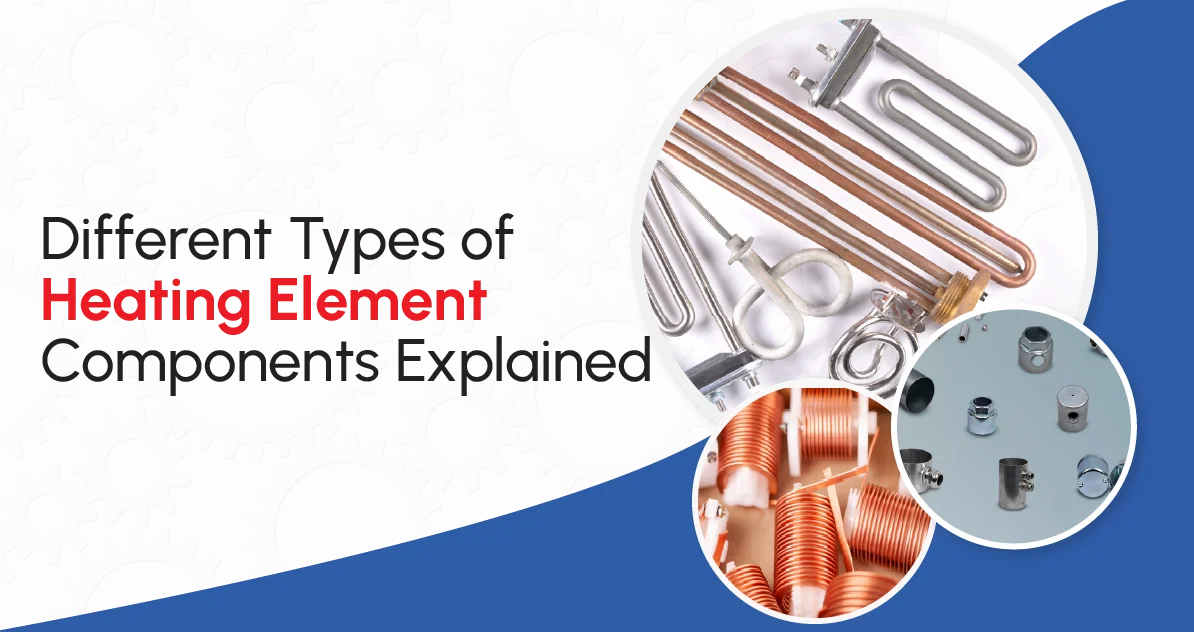
Heating systems rely considerably on a variety of precision-engineered components to function efficiently and safely. However, there are different types of heating elements available, which often confuses professionals sourcing components.
As a manufacturer of precision metal components for heating elements, we have prepared a technical overview of six key heating element component types. This guide helps procurement teams specify components accurately, minimising errors and delays.
Different types of heating element components:
1. Metal stamping parts (Ferrous & Non-Ferrous)
Metal stamping parts are used for high-volume heating element assemblies where consistency and speed matter. They reduce material waste while maintaining dimensional accuracy in heating element production.
- Material Composition: Steel, stainless steel, copper alloys, brass, aluminium
- Manufacturing Process: Precision stamping of metal sheets to exact dimensions using die sets and presses
- Applications: Industrial assemblies and heating equipment housings, structural parts of tubular and immersion heaters
- Benefit: Provides reliable mechanical strength and dimensional accuracy for mounting and alignment of heating elements.
2. Turned Components (Machined)
Turned components are precision parts produced on lathes from metal rods. They are suitable for applications requiring tight tolerances and high repeatability.
- Material Composition: Ferrous metals (steel, stainless steel), non-ferrous metals (brass, copper)
- Manufacturing Process: CNC turning and machining to custom diameters and lengths per design specifications
- Applications: Used in fittings, bushings, and sub-assemblies within heating systems
- Benefit: Ensure proper alignment and reliable assembly
3. Immersion Heater Elements- Metal Immersion Covers & Related Parts
Metal immersion covers protect the internal components from fluid exposure in liquid-heating applications.
- Material Composition: Ferrous and non-ferrous metals, including stainless steel and brass (depends on the heating medium- water, oil, or chemicals)
- Manufacturing Process: Metal forming, stamping, and sometimes machining for an accurate fit
- Applications: Protects the internal components of immersion heaters and provides corrosion-resistant coverage for liquid heating environments.
- Benefit: Ensures electrical isolation and mechanical safety while maintaining thermal conductivity
4. Terminal Pins & Connectors (Stamped/Turned)
Terminal pins and connectors deliver power to the heating element. In HVAC and industrial heaters, terminal pins prevent failure risk.
- Material Composition: Steel and nickel-coated metals
- Manufacturing Process: Precision stamping and turning to produce consistent pins and connector shapes
- Applications: High-temperature environments where secure electrical contact is critical
- Benefit: Provides electrical connections for tubular heating elements and ensures reliable current transfer and mechanical stability
5. Brass & Stainless Steel Forgings – Flanges / Fittings
In heating elements, brass forgings offer better grain flow and higher fatigue resistance than cast parts. For immersion heater elements, brass machined components play a critical role in safety and heat control.
- Material Composition: Brass, stainless steel
- Manufacturing Process: Precision turning and machining; some components may be stamped for flange profiles
- Applications: Connects heating elements to tanks, pipes, and manifolds
- Benefit: Guarantees leak-free sealing and structural integrity in liquid and gas heating systems.
6. PTFE / Sheet-to-Rod Stamped & Turned Parts
PTFE components are used where heat and electrical insulation must coexist. In heating elements, they prevent short circuits and maintain insulation integrity, even under continuous heat exposure.
- Material Composition: Polytetrafluoroethylene (PTFE)
- Manufacturing Process: Stamping of PTFE sheets and turning of PTFE rods into specific shapes
- Applications: High-temperature chemical exposure occurs
- Benefit: Provides insulation and chemical resistance for electrical and liquid heating assemblies
Custom Heating Element Components:
When evaluating and purchasing a heating element component, industrial buyers should also consider factors such as energy efficiency and compatibility. Custom heating elements components are better suited to address unique process specifications and environmental conditions.
Why Component Selection Is Critical?
Heating elements are engineered assemblies. Hence, your component defines how your heating element performs in the real world, including factors such as heat output, safety, performance, and durability.
Conclusion:
The right choice of heating element components directly impacts overall system performance, safety, and operational lifetime.
For expert guidance or specific product recommendations, contacting leading heating element manufacturers and suppliers is highly recommended.
Supra India designs, manufactures, and supplies quality heating element components globally. For heating components for industrial or domestic heating elements, request the datasheet for your required product.